MTL vs DTL: the drip tip bore explained
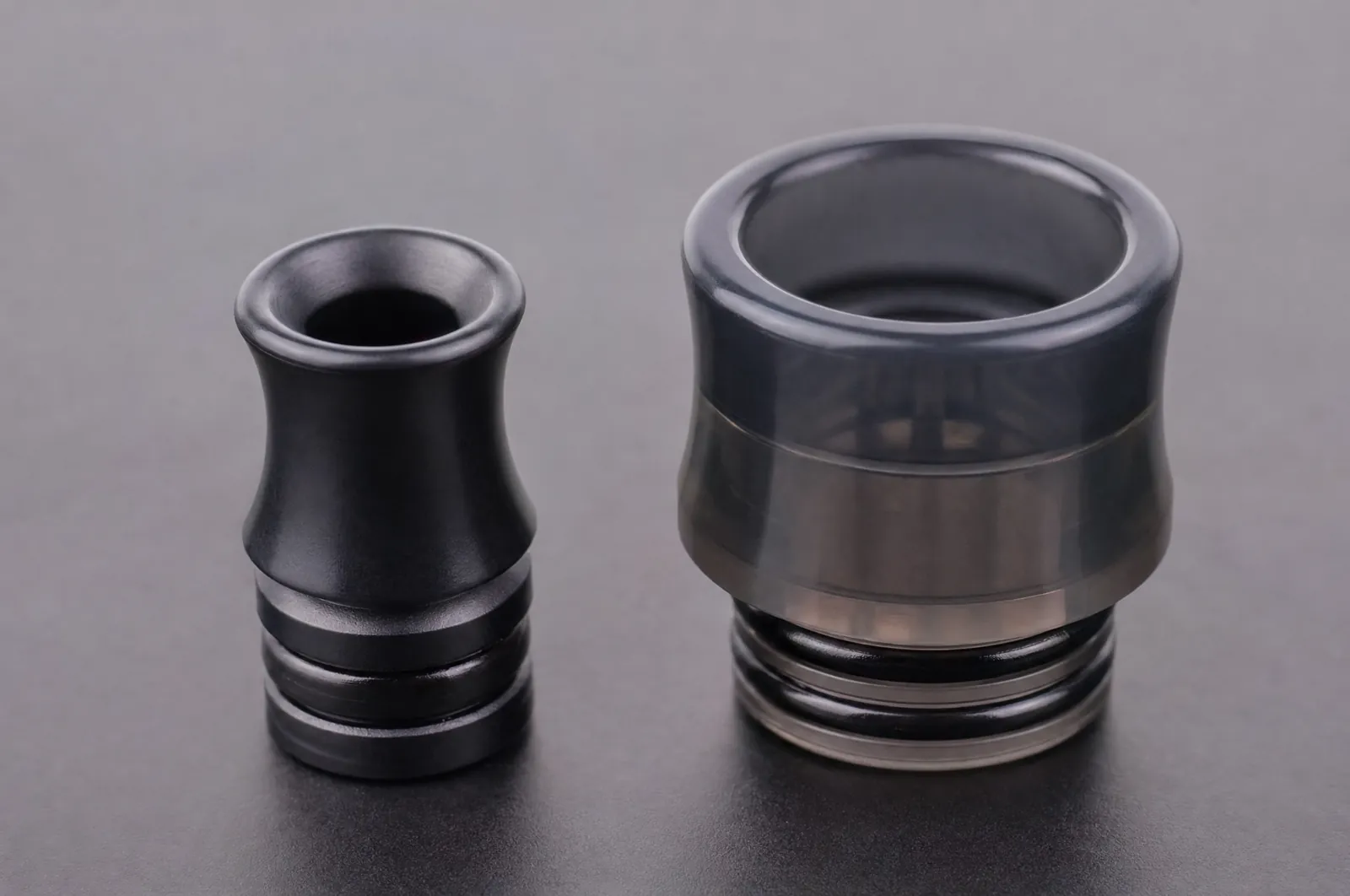
Two vapers, two gestures: one sips in tight little pulls, the other draws a single wide breath straight to the lungs. Between those styles, MTL vs DTL draws a line that decides the hardware, the liquid and even the mouthpiece. The drip tip, usually treated as a simple accessory, plays a precise part in that story through its bore, the internal diameter that lets more or less air through.
MTL vs DTL: what the bore changes
MTL, mouth to lung, holds the vapour in the mouth before inhaling it, much like a cigarette. DTL, direct to lung, pulls the vapour straight into the lungs in one movement. British retailers use those two abbreviations almost universally, so they are the terms to know when reading a product page.
The bore of the drip tip follows that choice. A narrow channel serves the tight MTL gesture, a wide channel serves the open DTL one. The mouthpiece does not create the draw, but it reinforces it or works against it.
A bore badly matched to the style spoils the vape. A wide channel on an MTL setup destroys the sense of resistance, a narrow channel on a DTL setup chokes the volume. Matching tip to gesture is one of those fine adjustments people forget exists.
The MTL draw and the narrow bore
MTL rests on a two stage inhale, short and tight. The hardware that goes with it points the same way: fine airflow slots and a restricted channel.
A narrow bore offers a light resistance to the draw, which is exactly what the MTL vaper is after. That sense of a held pull is part of the comfort, and it is why 510 tips, with their fine channel, dominate this kind of setup in Britain.
By concentrating the flow, a narrow channel also keeps the vapour dense and warm, which pushes flavour forward. MTL is often chosen for that clean aromatic delivery at low power, and a tight bore extends the same intention right up to the lips.
Most pod kits sold in British shops are built around this style, which is why so many of them ship with a moulded or narrow tip and no obvious way to widen it.
The DTL draw and the wide bore
At the other end, DTL is about volume and breadth. It calls for a generous airflow that the mouthpiece has to pass without pinching.
A wide bore supports that direct inhale: it lets a large air volume circulate, which cools the vapour and permits the wide gesture towards the lungs. The 810 tips, short and open, are cut for exactly this use.
A narrow channel here would be counterproductive, throttling the very output the rest of the hardware is trying to produce. The relationship between tip size and bore diameter is set out in our guide to the 510 and 810 sizes.
Wide bore tips also tend to run cooler at the lips, simply because more air travels with the vapour, which is why sub ohm vapers rarely complain about heat once the bore is right.
RDL, the ground in between
Between tight and airy sits an intermediate style, usually written RDL, for restricted direct lung. It is worth knowing before you commit either way.
RDL offers a direct inhale but with more resistance than a full DTL. It attracts vapers who find MTL too closed and DTL too open, and British retailers now list it as a category in its own right.
On the mouthpiece side, it gets on with an intermediate bore or an 810 with a moderate channel. That nuance is a reminder that the draw is not a two position switch but a slider, and the tip is one of the things that moves it.
MTL vs DTL: matching the mouthpiece to your style
Choosing a tip without thinking about the draw means ignoring half the equation. A few simple markers avoid the mismatch, whichever side of MTL vs DTL you sit on.
For a tight, flavour led vape, a fine channel, usually a 510, supports the gesture. For a wide, high volume vape, a broad 810 releases the flow. For something in between, an intermediate bore delivers the compromise.
Material is chosen afterwards, according to the warmth you want, because the bore governs flow rather than temperature. Our comparison of drip tip materials covers that second decision, and the two combine without overlapping.
The classic mismatch, and how to spot it
A lot of discomfort blamed on hardware actually comes from a tip badly matched to the draw. Spotting that misstep often buys comfort without buying anything.
Fitting a very wide channel to a setup designed for a tight draw produces a hollow feeling: air passes too freely, the resistance disappears and the flavour thins out. Keeping a narrow channel on an airy setup does the reverse, throttling the volume the tank is built to make.
In both cases the fix is sometimes as simple as a different tip or an adapter, before touching the airflow ring at all. Checking that agreement is the first useful reflex, and it costs nothing to try.
Heat is the other clue. A draw that feels both tight and scalding usually means the bore is fighting the setup, and our piece on keeping a mouthpiece cool explains why bore, height and material all pull on the same rope.
Frequently asked questions
Is the drip tip enough to turn my MTL setup into a DTL one?
No, on its own it does not transform a setup. The draw depends mainly on the tank’s airflow slots and on the coil fitted. The tip refines the sensation: a wider bore opens a setup slightly, a narrow one closes it, but only within the limits the rest of the hardware sets.
Which bore should I choose for a tight draw?
A narrow channel, typical of 510 tips, suits a tight draw. It recreates the resistance MTL vapers look for and keeps the vapour dense for flavour. A wide channel would break that sensation and leave the draw feeling loose.
Can you vape MTL with an 810 tip?
It is possible but rarely ideal. The wide channel of an 810 passes too much air for a genuinely tight feel. An adapter down to a finer channel, or a 510 tip fitted through a reducer, restores a coherent MTL draw on a wide tank.
Does RDL need a particular mouthpiece?
RDL gets on with an intermediate bore or an 810 with a moderate channel, neither too open nor too closed. The point is to avoid the extremes: a very wide channel pulls towards full DTL, a very fine one drags back towards MTL.
Does the bore affect how much liquid I use?
Indirectly. A wide bore favours an airy draw and abundant vapour, usually paired with powerful setups that consume more liquid. The channel alone does not set consumption, but it accompanies a style that does weigh on the bottle.
Finding the right agreement between draw and mouthpiece
MTL vs DTL is not settled only in the airflow slots of a tank: it carries on into the bore of the drip tip, which reinforces the tight draw or releases the airy one. A fine channel for flavour and a held sensation, a wide channel for volume and breadth, an intermediate for those who refuse to choose.
Seen this way the mouthpiece becomes a quiet slider for vaping comfort rather than a decorative afterthought. It is by matching each part to your own gesture that a merely adequate setup turns into one that is genuinely pleasant to use, and the change costs less than any other upgrade you could make.
Editorial content for adults only. Vaping is for over-18s in the United Kingdom and involves nicotine, a highly addictive substance. Nothing here is a buying recommendation.